
PLATYCERIUM PROTOCOL 003 — PART 1 / BASICS

LIGHT / HOW MUCH LIGHT DOES A STAGHORN FERN NEED?

“Does a staghorn fern need strong light?”

Not necessarily.

If your goal is simply to keep your first staghorn fern growing well,

the light requirement is usually less demanding than expected.

A bright balcony

A well-lit window

Or a stable indoor setup with artificial light.

For most commonly grown staghorn ferns, any of these can be a good starting point.
01 / LIGHT DIRECTION

It is not only about how much light you have.

Direction matters too.

Plants naturally grow toward light.

If the main light source consistently comes from the side, below, or from an off-center angle,

new fertile fronds will gradually follow that direction.

The plant may remain perfectly healthy.

But over time, the form can become uneven.

Fronds may open asymmetrically.

The plant may lean to one side.

Its overall structure may lose balance.

If you want the fertile fronds to open naturally and symmetrically,

pay attention not only to light intensity,

but also to— where the light is coming from
02 / WINDOW LIGHT

Bright window light is usually a good place to start.

But if the light consistently enters from only one side,

the plant will eventually respond to it.

So when growing near a window, do not only ask:

“Is this bright enough?”

Also observe the direction of the newest fronds.

They will show you where the plant is looking for light.
03 / ARTIFICIAL LIGHT
No natural light? Use a grow light.
A lack of natural light does not mean you cannot grow staghorn ferns indoors.
Artificial grow lights can provide a stable alternative.
As a general starting point, we recommend around:
8–12 HOURS of light per day
But artificial light, just like natural light, also has direction.
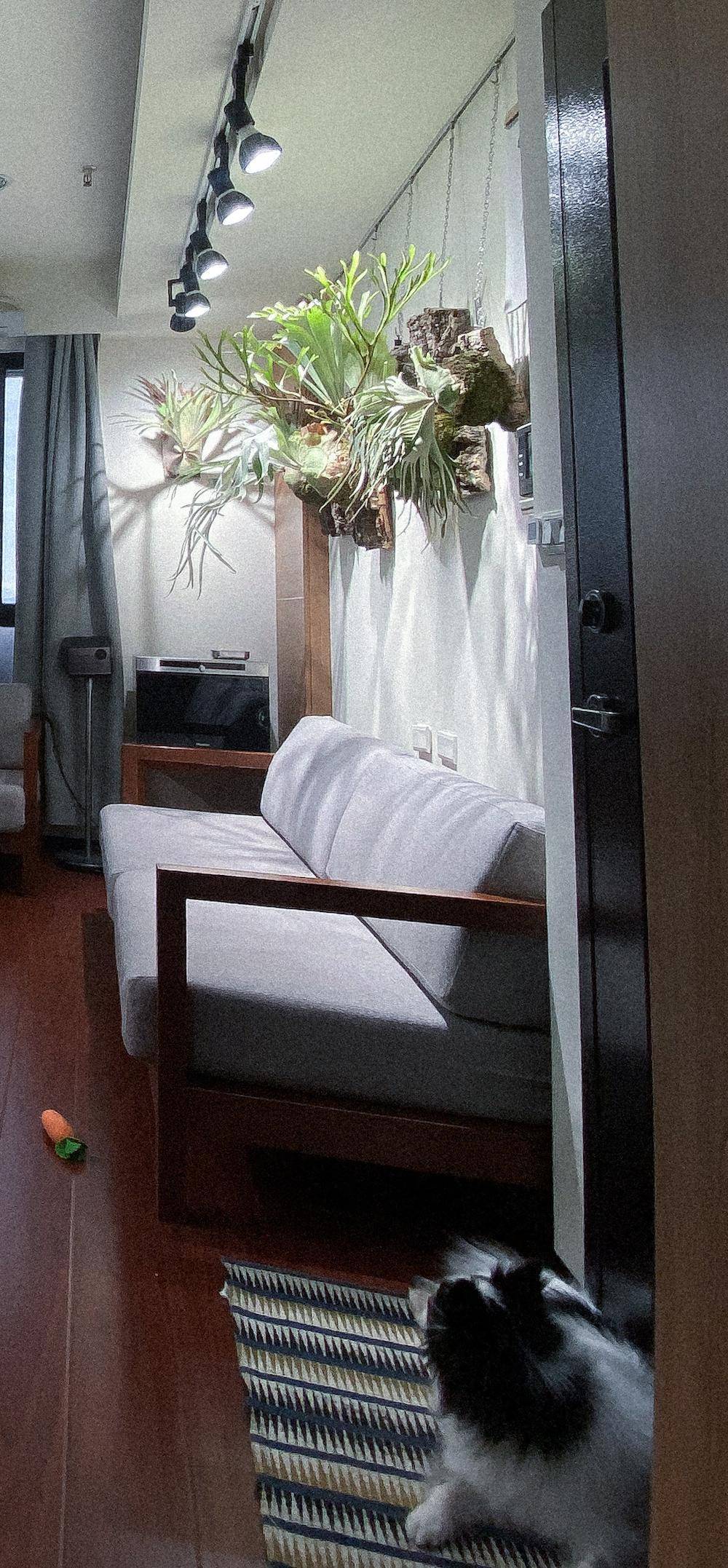
Position the fixture either:
directly above the plant
or
around 45° toward the direction you want the fronds to grow
This helps provide stable light while encouraging a more balanced, symmetrical form.
04 / GROW FOR FORM
Keeping a plant alive and growing it beautifully are not the same thing.
This is where light becomes more interesting.
A staghorn fern can be healthy,
but still not show its best form.
Frond direction, length, posture, and overall structure can all be influenced by the light environment.
If this is your first staghorn fern, a stable and bright location is enough.
But if you want each species or cultivar to show its own character, you need to start thinking about:
Species characteristics / native habitat / light intensity / light direction / growth stage
Light is not simply “enough” or “not enough.”
Once you begin growing for form,
light becomes part of how you shape plant expression.
05 / SSL GROW LIGHT
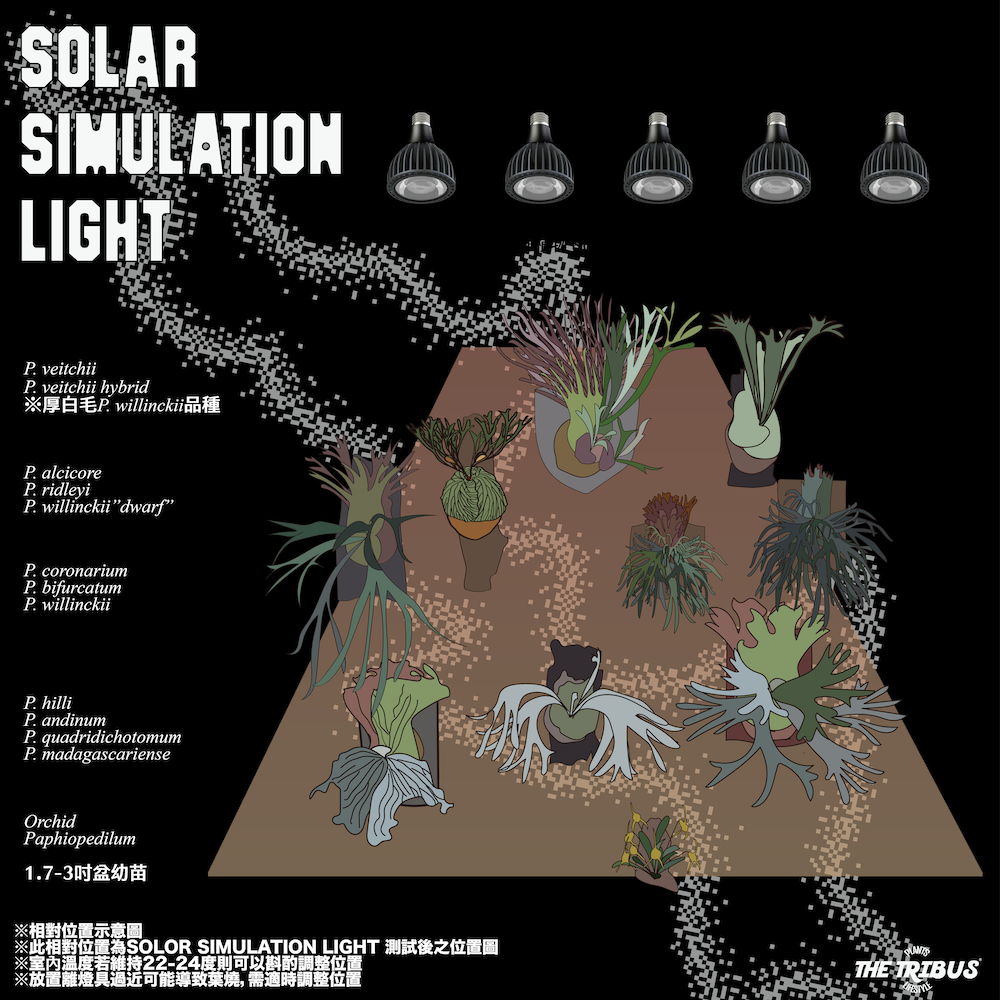
Use distance to create different light zones.
Using the THE TRIBUS STUDIO ® SSL Grow Light as an example,
plants placed at different heights under the same fixture will receive different amounts of light.
That allows us to organize plants by both type and growth stage.
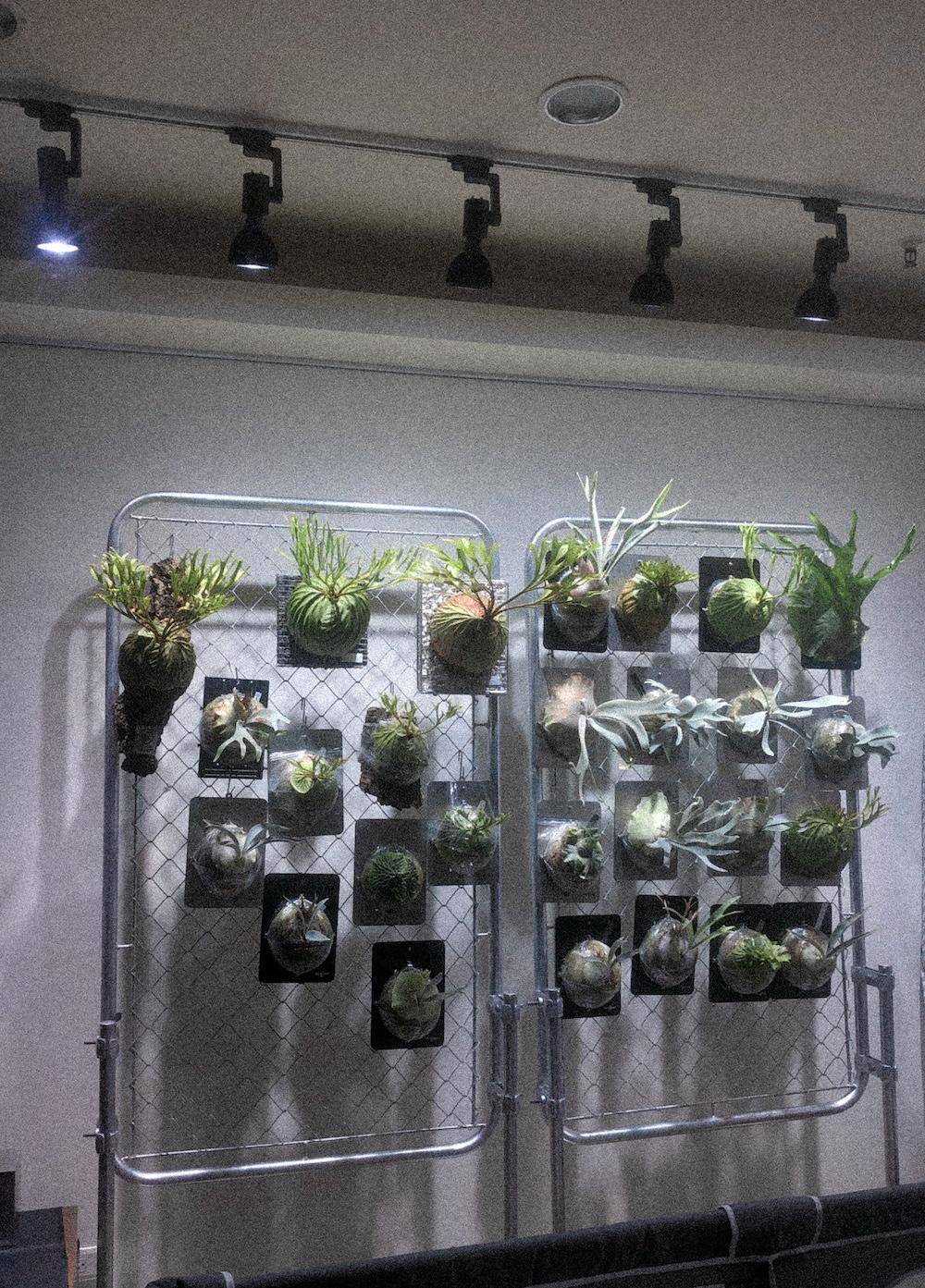
The setup shown here uses the
THE TRIBUS STUDIO ® SSL 25W Grow Light
UPPER LEVEL / HIGH LIGHT
Around 80 cm from the light source
can be used for plants with heavier white indumentum, more upright growth,
or varieties that generally perform better under stronger light.
For example:
P. veitchii / P.veitchii Auburn River / P.ridleyi
MIDDLE LEVEL / MEDIUM LIGHT
Suitable for:
P.willinckii / P.willinckii hybrids / dwarf varieties / P. alcicorn
LOWER-MIDDLE LEVEL / LOWER LIGHT
Farther from the light source
P. hillii / juvenile plants / Sporeling
This is not a fixed formula.
It is simply a reference system based on light distance and plant characteristics.
Our SSL placement guide is designed to make this easier to understand when
building an indoor staghorn fern setup for the first time.
06 / OUTDOOR LIGHT
Outdoor growing works well, but watch western exposure.
A balcony with natural light and good airflow can be an excellent growing environment.
However, prolonged western sun is usually not our first choice.
In Taiwan, summer afternoon sun can bring both intense light and extreme heat.
If western exposure is your only option, we strongly recommend using shade cloth to filter part of the light.

At our Zhongli store, the two greenhouses use different shading setups.
One uses 70% white shade cloth.
The other uses 30% white shade cloth.
During summer, we may add another layer of 80% black shade cloth.
Do not place a staghorn fern under the strongest sun simply because it needs light.
Too much light can be filtered
Too little light can be supplemented.
If your balcony is naturally dim, or northern Taiwan enters a long stretch of winter rain or monsoon weather,
artificial light can still be added as supplemental lighting.
、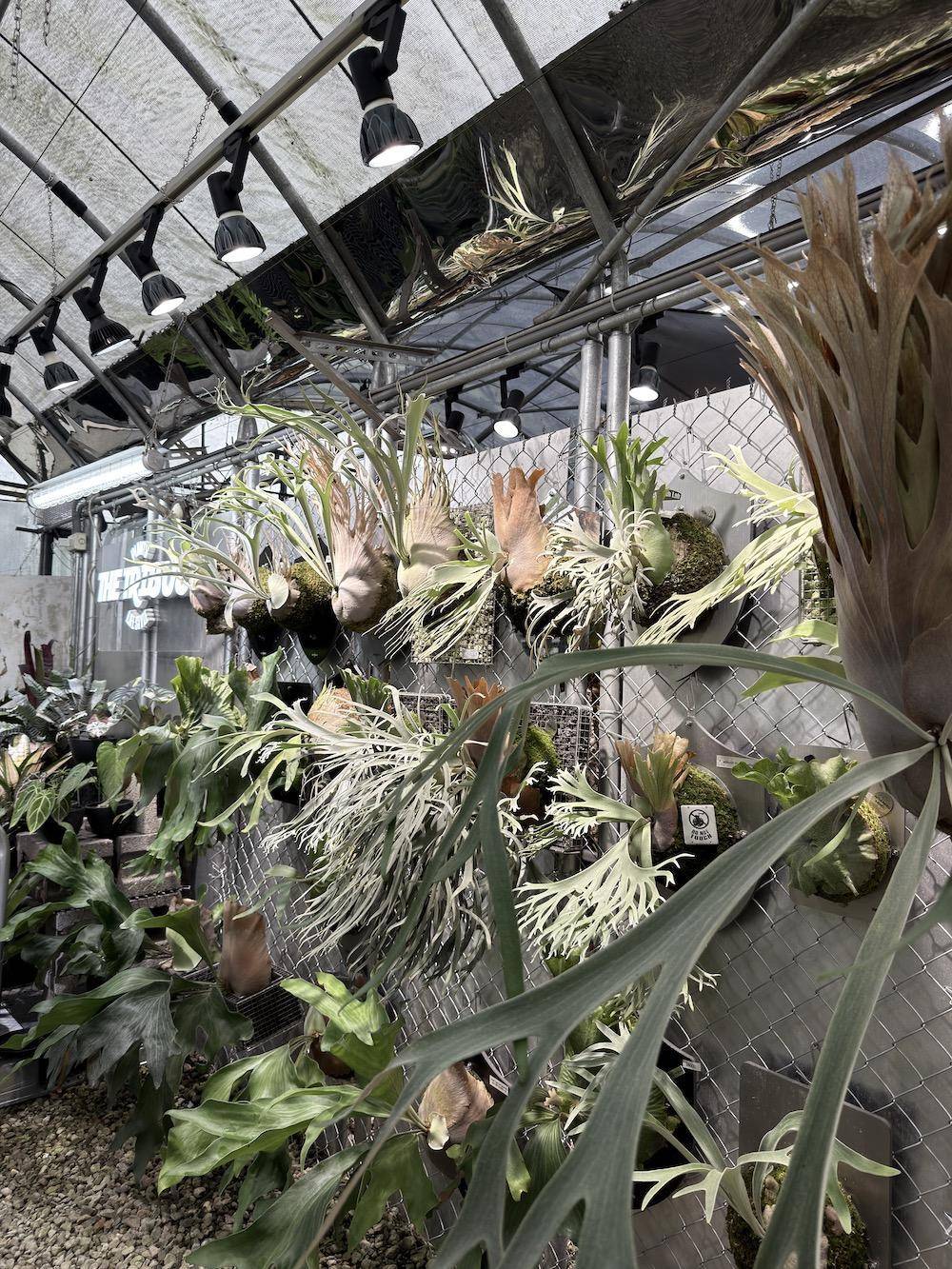
During extended rainy periods, we may run grow lights for 8–12 hours.
Supplemental lighting does more than maintain growth.
It can also improve form and help each variety express its own characteristics more clearly.
This is how we manage light at our own store as well.
When natural light is sufficient, we use it.
When winter or long rainy periods reduce available light, we supplement with grow lights.
Outdoor growing does not mean relying only on natural light.
Indoor growing does not automatically mean insufficient light.
Filter what is too strong.
Add what is missing.
Then keep adjusting based on the plant.
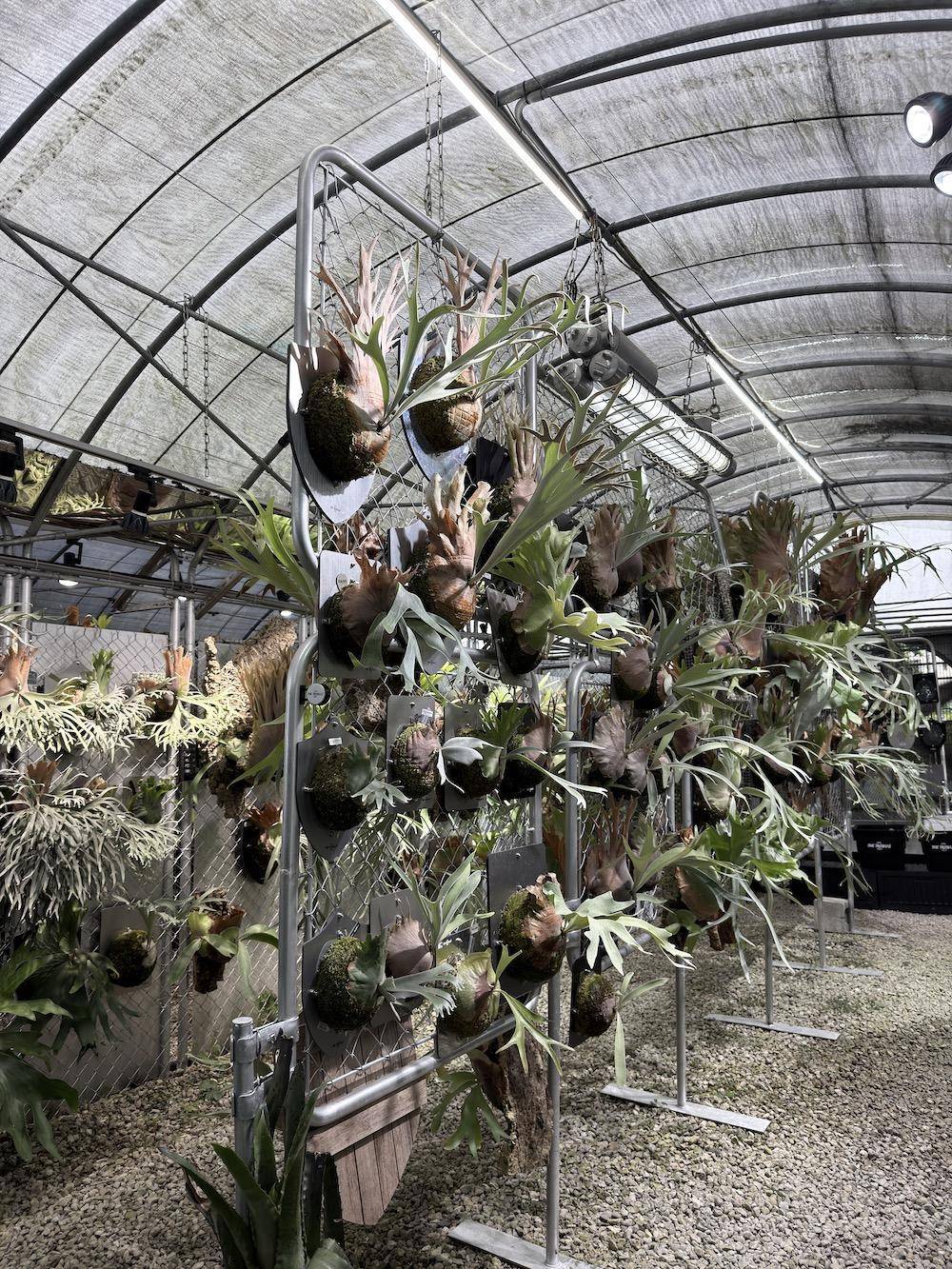
The highest positions are usually reserved for plants that prefer stronger light.
But Taiwan’s summer sun can still become excessive, especially during sudden periods of clear, intense exposure.
Even high-light plants need observation and adjustment.
This indoor setup uses the THE TRIBUS STUDIO ® SSL 25W Grow Light

If you are building your own indoor staghorn fern growing area,

start by understanding the fixture output, coverage, and how it fits your space

07 / WATCH THE FRONDS

The fronds will tell you when the light is too strong.

If previously healthy fronds begin to turn noticeably yellow, bleached, or show localized damage,

reassess the light environment.

Do not focus only on:

“How many hours of sun does this balcony get?”

Also observe:

Temperature / sun direction / time of day / frond condition / plant adaptation

Morning sun and western afternoon sun may both be direct sunlight.

But the stress they place on the plant can be very different.
08 / ADJUST

If your goal is simply to keep a staghorn fern healthy,

light does not need to be complicated.

Find a stable, bright environment.

Watch the direction of the light.

Supplement when natural light is insufficient.

That already solves most basic situations.

But if you want:

a silver type to look truly silver,

a Java type to show its own form,

and each cultivar to express what makes it distinctive,

then the question changes.

It is no longer simply:

“How much light does a staghorn fern need?”

You begin to look at the plant itself.

Its species.

Its native habitat.

Its new fronds.

Its response to the environment.

Then adjust from there.
PLATYCERIUM PROTOCOL 003 / COMPLETE

We have now established the three basic environmental

foundations for your first staghorn fern:

AIRFLOW

WATER

LIGHT

Airflow affects drying speed.

Drying speed affects watering.

Light begins to influence how the plant grows—

and what it eventually looks like.

These conditions are never separate.

Once you begin reading them together,

you begin to understand your growing environment.

Keeping a staghorn fern alive is not difficult.

Next, we begin learning how to grow it beautifully.
Light is a much bigger subject than it first appears.


So we will cover it in three parts:

PART 1 / BASICS
Basic lighting and placement

PART 2 / SPECTRUM
Grow lights and light spectrum

PART 3 / SPORELINGS
Lighting for sporelings

One step at a time,

we will build a clearer understanding of the light staghorn ferns actually need.


NEXT →

PLATYCERIUM PROTOCOL 003 / LIGHT — PART 2 / SPECTRUM


With 8 years of experience growing epiphytic plants,
THE TRIBUS STUDIO ®

From aesthetics to cultivation,
guiding you step by step as you grow your first staghorn fern.

Article|Olivia


