


P. veitchii ‘Auburn River’ | Australian Veitchii
Among the many Platycerium varieties, P. veitchii ‘Auburn River’ has long remained
a classic for growers who appreciate upright-growing staghorn ferns with strong architectural form.
The name Auburn River comes from Auburn River National Park in Queensland, Australia.
This form of P. veitchii is associated with populations from the Auburn River region
and has circulated in cultivation under its locality name.
In Taiwan, it is commonly known as the “Australian Silver Staghorn Fern.”
One of its most distinctive features is the shape of its shield fronds. Under suitable growing conditions,
they can develop into long, narrow, sharply pointed crowns that extend strongly upward.
There can also be considerable variation between individual plants.
Some develop very straight, upright crowns, while others show more delicate curves and branching.
This combination of variation, refinement,
and a slightly wild character is one of the reasonsAustralian Veitchii
has remained so popular among Platycerium growers over the years.
In our own growing terminology,
when the shield fronds begin to extend noticeably upward and develop into tall,
narrow, pointed crowns, we simply refer to this as “crown pushing.”
Australian Veitchii itself is not particularly difficult to grow.
If the goal is simply to maintain a healthy plant,
its basic care is not significantly different from that of many other Platycerium.
However, if the goal is not merely to keep the plant alive, but to consistently develop long,
refined, pointed crowns, then genetics, light, temperature, airflow, humidity,
and the plant’s overall growth condition can all influence the final form.
Below are several conditions we pay particular attention to based on our own experience growing Australian Veitchii.
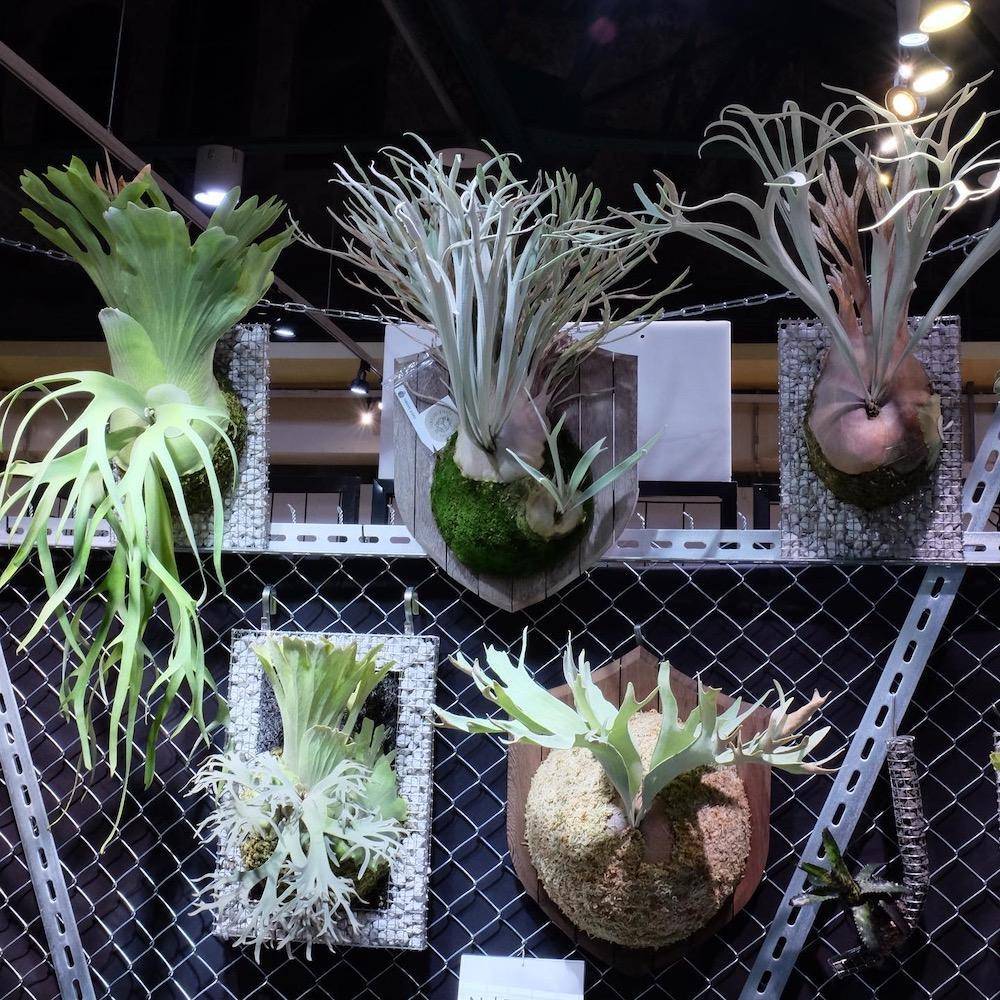
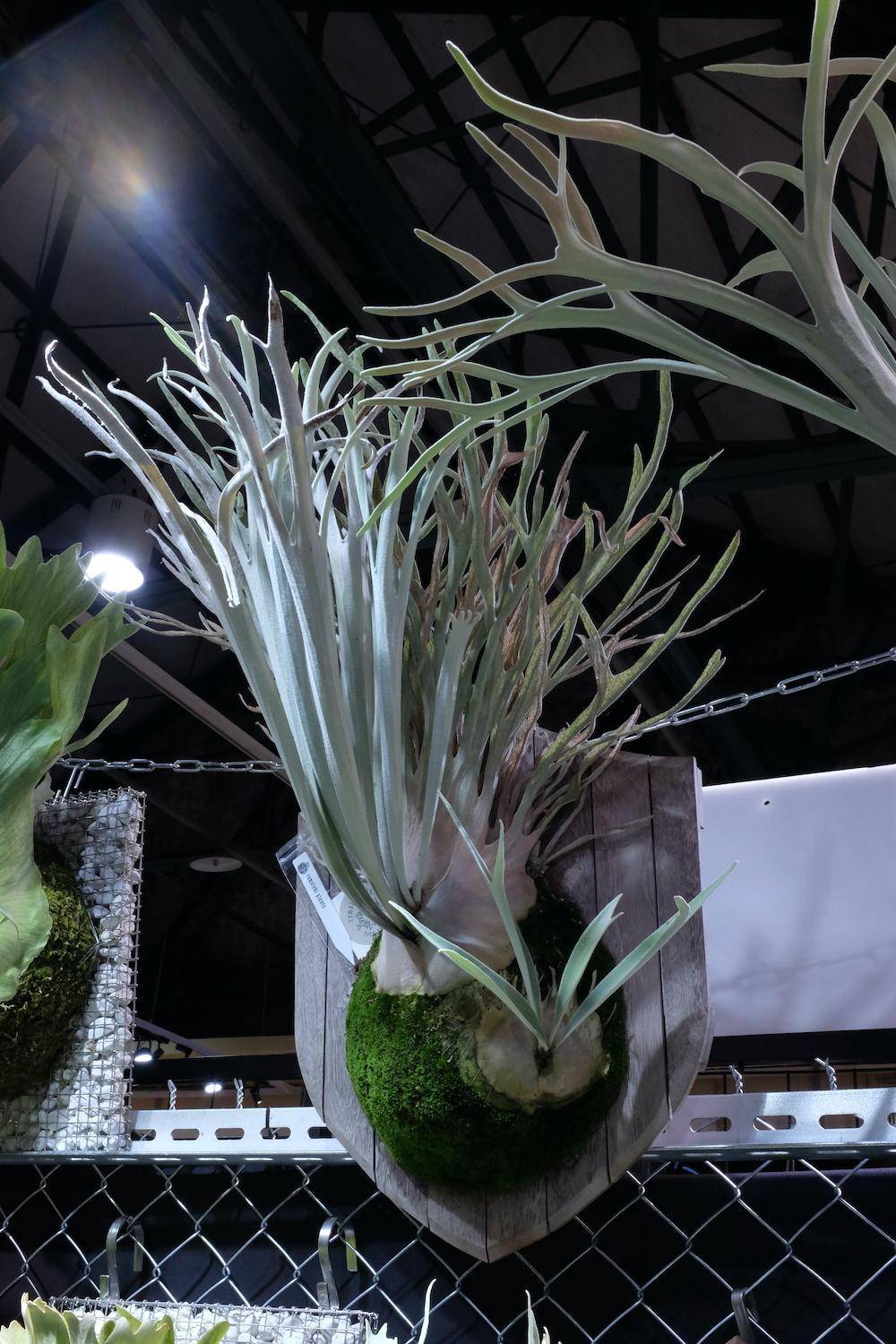
Figures 1 & 2 — Photographed in 2021. These plants showed exceptionally refined and complete form,
representing the classic Australian Veitchii appearance that became highly sought after among Platycerium growers.
01 | CHECK
Start With the Right Plant
If your goal is to develop beautiful, narrow, pointed crowns, the first thing to consider is not lighting or temperature.
First, make sure you are starting with the right plant.
Growing conditions can enhance and refine characteristics that already exist within a plant.
But the environment cannot create a form that the plant does not genetically have the potential to produce.
02 | LIGHT
Provide Sufficient Light
Light is one of the most important factors we consider when trying
to encourage strong crown development in Australian Veitchii.
Platycerium can generally adapt to a fairly broad range of light conditions depending on the species,
growing environment, and stage of development.
However, if the goal is to keep the shield fronds compact and upright while encouraging long, narrow,
pointed crowns, Australian Veitchii benefits from relatively strong and consistent light.
In our growing environment, we use approximately:
30,000 lux
as one of our reference points for cultivation.
This should be treated as a reference rather than a fixed requirement.
03 | TEMPERATURE
Temperature Control
Along with light, temperature is another factor we pay close attention to.
Based on our growing experience, when we want Australian Veitchii
to maintain a more refined form, we try to keep temperatures:
Below 30°C
This does not mean that Australian Veitchii cannot develop pointed crowns at around 30°C.
The more important consideration is whether prolonged heat is creating enough stress to slow or interrupt active growth.
Once the plant begins to stall because of heat stress, even if the other growing conditions are appropriate,
it becomes much more difficult to push the crown development toward its full potential.
If growth has already slowed significantly because of high temperatures,
simply adding more light or fertilizer may not produce the result you are looking for.
04 | AIRFLOW
Maintain Good Airflow
Airflow may not appear to be directly related to how tall or pointed the crown becomes,
but it is closely connected to the overall health of the plant.
Poor airflow, prolonged moisture on the fronds, rotting foliage,
or unhealthy root conditions can all restrict growth.
When a plant is struggling simply to maintain healthy growth
it is difficult to expect it to consistently produce well-developed shield fronds and refined crowns.
05 | OUTDOOR
Crown Development in Our Growing Environment
The following conditions are based on our long-term observations of Australian Veitchii growing in our own nursery:
Ambient temperature × Good airflow × Protected from direct rain × Full-day natural light
In our environment, Australian Veitchii tends to focus more heavily on fertile frond development during summer.
As we move into autumn and temperatures begin to fall,
he shield fronds gradually start showing more obvious upward crown development.
During this period, the difference between daytime and nighttime temperatures in our nursery can reach approximately:
9–10°C
Our nursery is also surrounded largely by agricultural land,
so humidity from nighttime through early morning can become quite high.
At certain times, relative humidity can approach:
90% RH
Under these conditions, our Australian Veitchii have consistently developed narrow,
pointed crowns during autumn and winter.
The important point, however, is not to simply copy the numbers 9–10°C or 90% RH.
What matters is that several environmental conditions are occurring together:
Lower temperatures, a noticeable day–night temperature difference,
sufficient light, good airflow, and relatively high humidity.
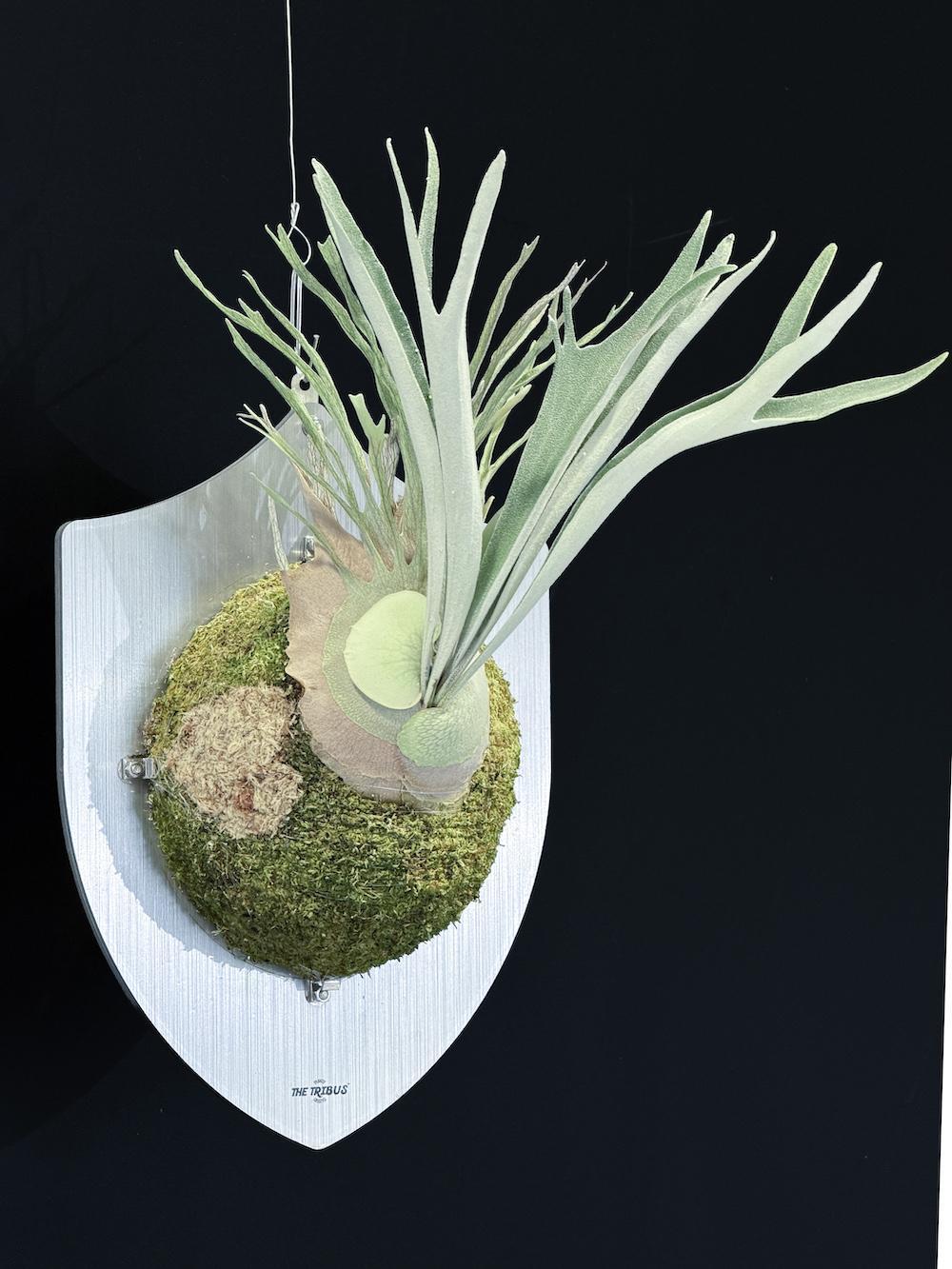
Spore-grown offspring from the mother plants shown in Figures 1 & 2.
This plant has never been grown in an air-conditioned room and has developed entirely under our nursery conditions.
This individual remains relatively compact and develops finer, narrower crowns.
Even among plants from the same spore-grown line, individual differences can still be observed.
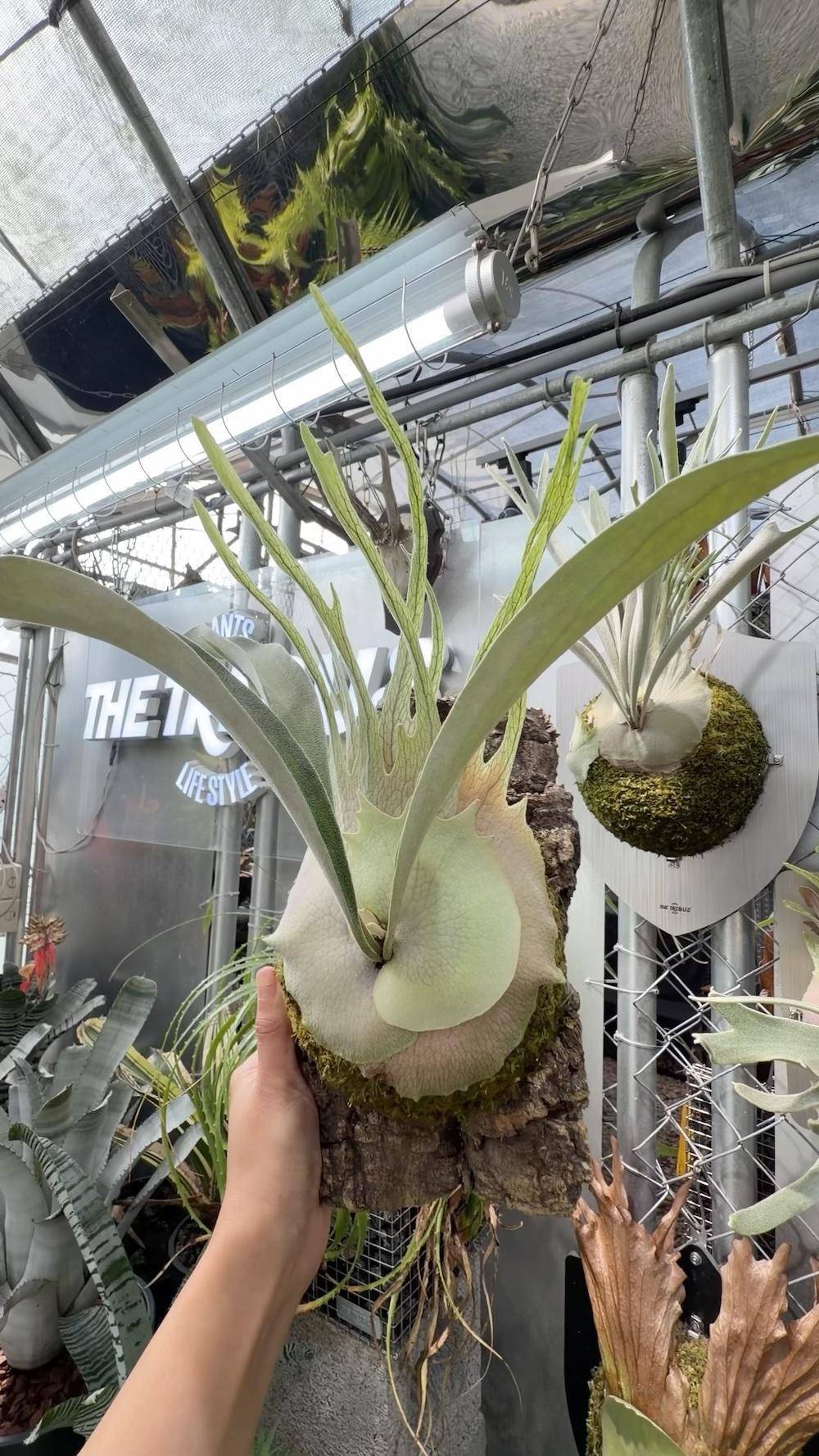
Another spore-grown individual from the mother plants shown in Figures 1 & 2.
Its crown development is noticeably less refined than the previous plant.
06 | INDOOR
Can Australian Veitchii Develop Pointed Crowns
Indoors Under Artificial Light and Air Conditioning?
Yes.
We have also observed Australian Veitchii grown long-term indoors using artificial lighting combined with air conditioning.
One actual growing setup used approximately:
22–24°C air-conditioned temperatures
Around 50% relative humidity
Full-spectrum red/blue grow lights (accurate lux measurements were not available)
Long-duration artificial lighting
Under these relatively cool, high-light conditions,
Australian Veitchii can still develop very pronounced and, in some cases, exceptionally refined pointed crowns.
However, we also observed another important factor.
Because relative humidity in this indoor environment was only around 50%,
the growing medium of some plants dried considerably faster.
If watering frequency was not adjusted accordingly,
individual plants could become excessively dry,
affecting the consistency of their growth.
As a result, even though certain plants developed extremely impressive pointed crowns,
the overall consistency of crown development across all Australian Veitchii in the same
indoor environment was lower than what we typically observe outdoors during autumn and winter.
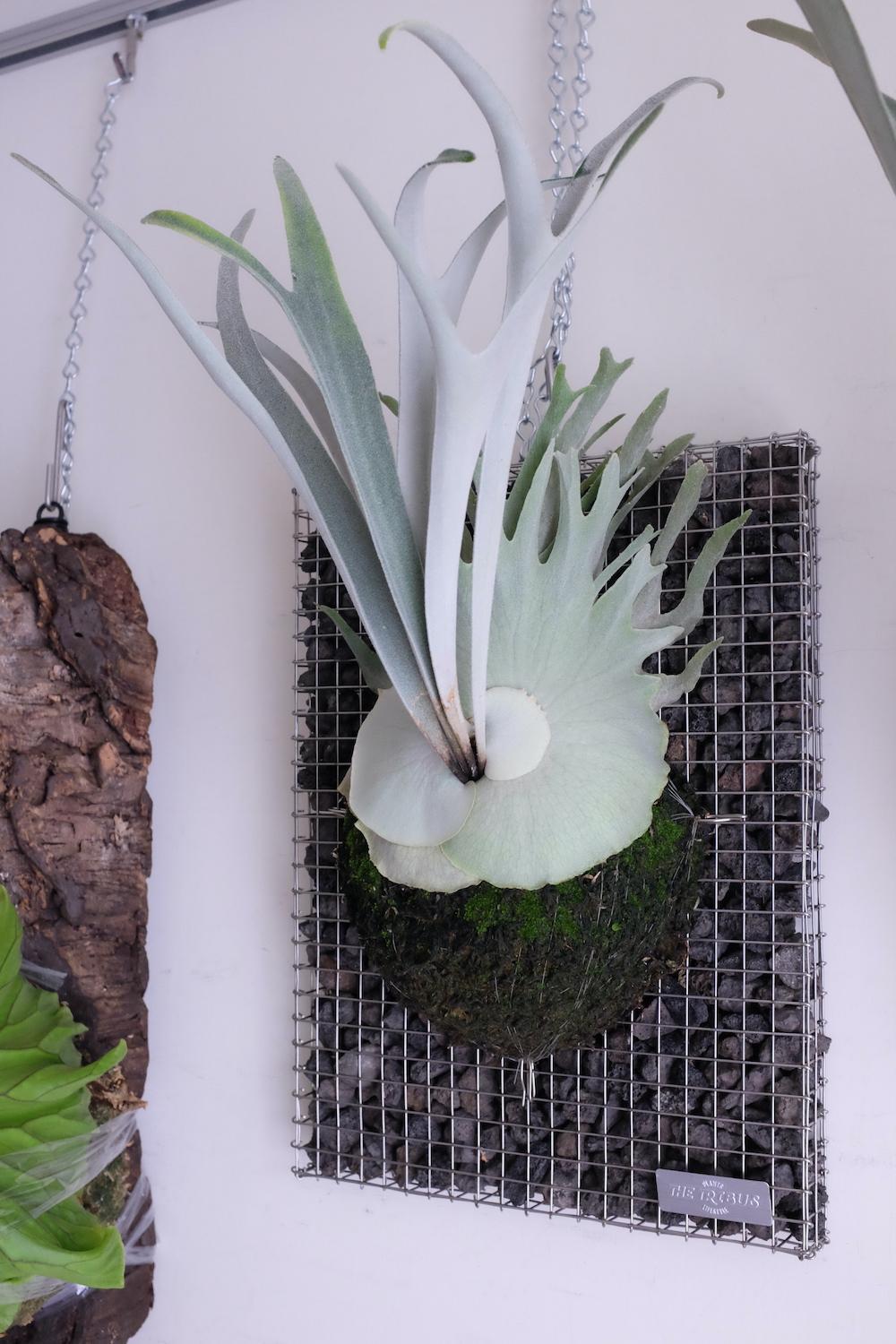
Australian Veitchii developing its crown under fully air-conditioned indoor cultivation.
Compared with plants grown under our non-air-conditioned nursery conditions,
the tips of the crowns appear slightly more rounded.
The difference becomes quite noticeable when the two forms are compared side by side.
Australian Veitchii can still develop an impressive form in a completely controlled indoor environment.
We have also observed another indoor setup used by a different grower.
At approximately 22–24°C with 50,000–60,000 lux, the plants not only developed narrow,
pointed crowns, but also showed another interesting surface characteristic.
The trichomes on the fronds appeared to become more densely aggregated,
creating small fuzzy clusters or a slightly “pilled” appearance on the leaf surface.
This suggests that temperature and light conditions may influence not only crown morphology,
but also the appearance and texture of the trichome layer.
These conditions provide a valuable point of reference.
However, they still need to be considered together with
humidity, airflow, drying rate of the growing medium, watering frequency,
and the current growth condition of each individual plant.
Cool temperatures and strong light can influence morphology.
But environmental balance determines whether that morphology can be maintained consistently.
Cultivar Provides the Possibility.
Environment Influences the Form.
If there is one Platycerium that clearly demonstrates this idea,
Australian Veitchii may be one of the best examples
The plant provides the genetic potential.
Light, temperature, humidity, airflow, and cultivation conditions
influence how strongly that potential is expressed
And even under the same conditions, individual plants can still develop differently
This is exactly what makes growing Australian Veitchii so interesting
PLATYCERIUM PROTOCOL 003 — COMPLETE
P. veitchii ‘Auburn River’
THE TRIBUS STUDIO ®
Photography / Article | Olivia & Albert
Growing Experience Disclaimer
The information above is based on 8 years of hands-on Platycerium cultivation, observation, and experimentation by THE TRIBUS STUDIO ®.
It includes observations from different growing environments, adjustments made over time,
trial and error, and troubleshooting throughout the cultivation process.
All figures mentioned in this article—including light intensity, temperature, and humidity
—should be treated as cultivation reference points rather than fixed formulas.
Every growing environment is different. Equipment, growing media, airflow, watering habits,
and the condition of individual plants can all affect the final result.
We recommend observing how your plants actually respond and continuously adjusting
your cultivation approach to find the conditions that work best in your own environment.
We share our experience to help reduce the distance of trial and error—not to provide a single, definitive answer.


