




商品詳情
商品名稱 | Product Name
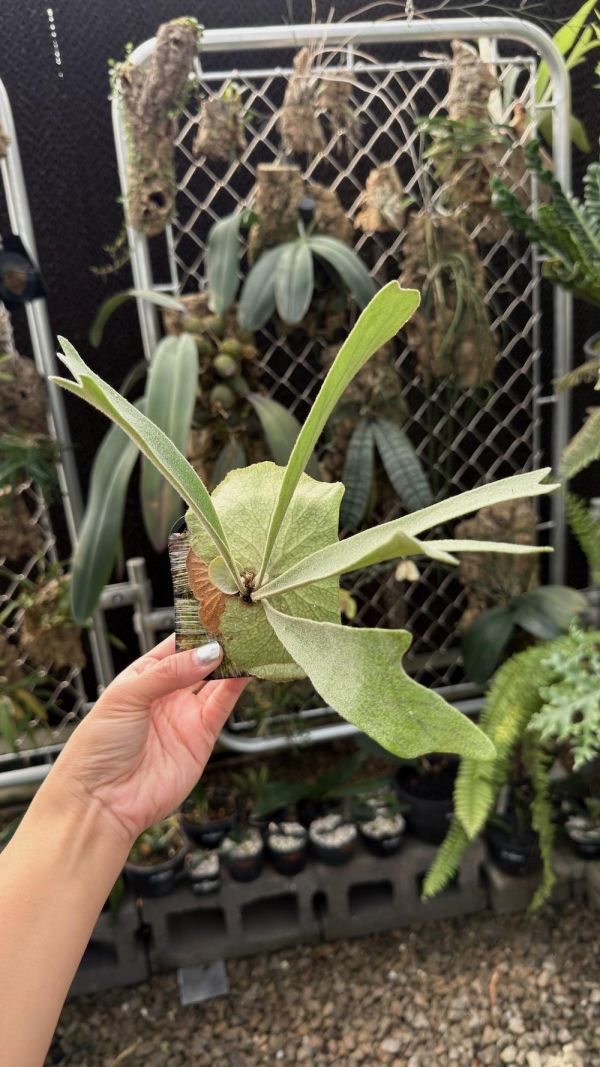
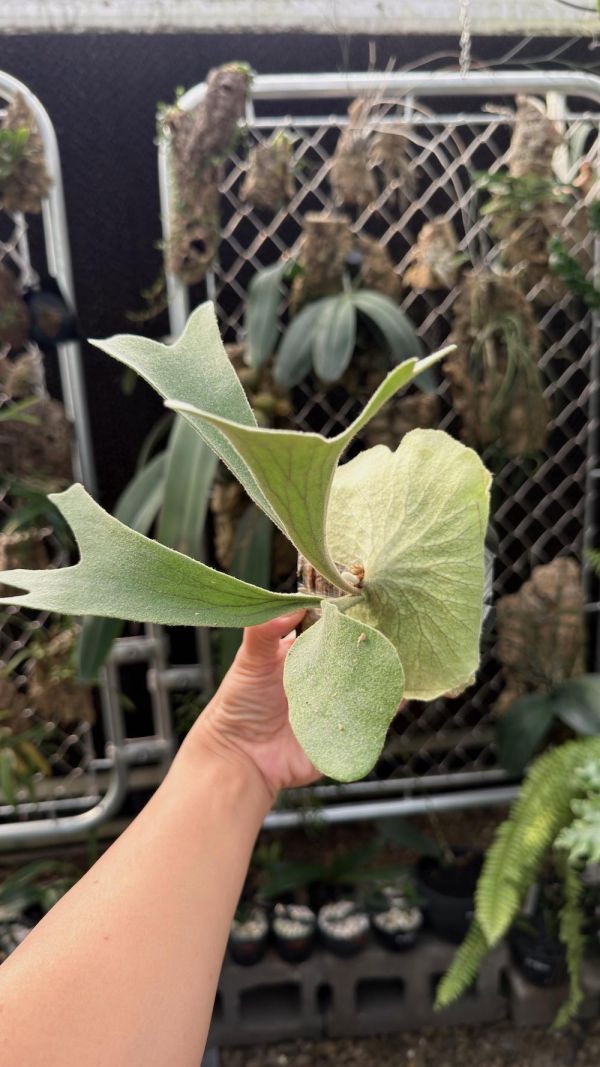
澳銀 × 立葉鹿角蕨・雜交種
P. veitchii × P. ridleyi
來源與背景 | Provenance
植物說明 / Plant Description
P. veitchii × P. ridleyi 為澳銀鹿角蕨(Platycerium veitchii)與立葉鹿角蕨(Platycerium ridleyi)的種間雜交組合,結合兩種原生鹿角蕨截然不同的生長型態與葉片結構,具有獨特的觀賞潛力。
P. veitchii 以銀白色葉面、直立生長的盾葉與細緻白色絨毛為主要特色;P. ridleyi 則以具有明顯立體稜脊的盾葉、獨特的葉片輪廓與特殊的孢子葉結構而受到收藏者關注。
兩者的雜交後代,其觀賞重點在於不同親本形態特徵之間的融合與變化。隨著植株成熟,盾葉輪廓、立體結構、孢子葉分岔及葉面質感,皆值得持續觀察。
由於種間雜交個體可能具有不同程度的性狀表現,實際形態仍應以植株本身的生長狀態為準,不宜將任一親本的特徵視為必然出現的固定表現。
P. veitchii × P. ridleyi is an interspecific hybrid between Platycerium veitchii and Platycerium ridleyi, combining two distinct staghorn fern species with contrasting growth habits and frond structures.
P. veitchii is recognized for its silvery foliage, upright shield fronds, and fine white trichomes, while P. ridleyi is distinguished by its prominently ridged shield fronds, distinctive frond contours, and specialized fertile-frond structure.
The ornamental interest of this hybrid lies in the potential combination and variation of traits inherited from both parents. As the plant matures, its shield-frond contours, three-dimensional structure, fertile-frond branching, and foliage texture may develop distinctive characteristics.
Because interspecific hybrids can express parental traits to varying degrees, actual morphology should be evaluated according to the individual plant rather than assuming that specific characteristics from either parent will necessarily appear.
養護要點 | Care Tips
光照 / Light
建議明亮散射光至適度較高的光照環境。
由於親本之一為 P. veitchii,可將較明亮的環境作為栽培方向,但不應直接假設雜交個體具有與澳銀鹿角蕨完全相同的耐光能力。
穩定且適當的光照有助於維持健康的葉片發展與株型結構。若需增加光照強度,應循序漸進調整,並觀察新葉生長及葉面反應,避免突然曝曬於長時間強烈直射光下。
Bright indirect to moderately high light is recommended.
With P. veitchii as one of its parents, relatively bright conditions may serve as a cultivation reference. However, the hybrid should not automatically be assumed to have the same light tolerance as pure P. veitchii.
Stable and suitable lighting supports healthy frond development and structural growth. Increase light exposure gradually while monitoring new fronds and foliage response, and avoid sudden exposure to prolonged harsh direct sunlight.
給水 / Watering
以水苔球狀態作為給水判斷依據。
當水苔球呈現如「擰乾毛巾」般微濕狀態時再進行澆水,給水後需確保良好通風,使其逐步乾燥並形成穩定乾濕循環,避免長時間過濕或完全乾透。
由於 P. ridleyi 對根部環境的通氣性與介質積濕較為敏感,建議特別注意水苔球內部的乾燥速度,避免僅憑表面乾燥便反覆大量給水。
實際給水頻率應依水苔用量、根系狀態、植株尺寸與環境乾燥速度調整,不宜以固定天數作為唯一判斷依據。
Water based on the condition of the sphagnum moss ball.
Water when it feels lightly moist, similar to a wrung-out towel. Ensure proper airflow after watering to maintain a stable wet–dry cycle. Avoid both prolonged wetness and complete desiccation.
As P. ridleyi is particularly sensitive to poor root-zone aeration and prolonged moisture retention, pay close attention to the drying rate inside the sphagnum moss ball. Avoid repeated heavy watering based solely on surface dryness.
Adjust watering frequency according to moss volume, root development, plant size, and environmental drying rate rather than relying solely on a fixed schedule.
通風 / Airflow
保持良好且穩定的空氣流動,是此雜交組合的重要栽培原則。
良好通風有助於給水後的水苔逐步乾燥,降低根部與盾葉基部長時間積濕的風險,並維持健康的葉片生長。
室內栽培建議搭配循環風扇或空調,避免長時間處於高溫、悶濕且氣流停滯的環境。
Good and consistent airflow is an important cultivation principle for this hybrid.
Proper ventilation supports gradual drying of the sphagnum moss after watering, reduces the risk of prolonged moisture accumulation around the roots and shield-frond base, and promotes healthy frond development.
For indoor cultivation, circulation fans or air conditioning are recommended to avoid prolonged hot, humid, and stagnant conditions.
溫溼 / Temp & Humidity
建議以 24–30°C、相對濕度 60–80% 作為初步栽培參考,並依植株實際生長反應調整。
此範圍為依據親本生長需求所提出的管理參考,並非已確立的雜交種專屬標準。
高溫或高濕環境下,應特別注意空氣流動與介質乾燥速度,避免水苔長時間維持過濕狀態。
A temperature range of 24–30°C with 60–80% relative humidity may be used as an initial cultivation reference, with adjustments based on the plant’s actual growth response.
These values are suggested management references based on the cultivation requirements of the parent species rather than established hybrid-specific standards.
Under warm or humid conditions, pay particular attention to airflow and substrate drying rates to prevent prolonged moisture retention.
注意事項 | Notes
本品種為 P. veitchii 與 P. ridleyi 的種間雜交組合,主要觀賞價值在於兩種親本形態特徵的融合與變化。
銀白色葉面、盾葉直立程度、立體稜脊與孢子葉結構等特徵,皆可能因個體差異及成熟度而呈現不同表現,不應視為每株植株必然具備的固定特徵。
This hybrid combines P. veitchii and P. ridleyi, with its ornamental interest centered on the potential integration and variation of traits from both parent species.
Silvery foliage, upright shield-frond growth, prominent ridges, and fertile-frond structure may vary among individuals and developmental stages. These characteristics should not be regarded as guaranteed traits in every plant.
幼株階段可能尚未完整呈現成熟後的盾葉輪廓與孢子葉結構。
隨著植株生長,盾葉的立體形態、葉片角度、孢子葉分岔與整體株型仍會逐步發展,建議以長期觀察作為形態判斷依據。
Juvenile plants may not yet display the mature shield-frond contours or fertile-frond structures.
As the plant develops, shield-frond architecture, frond orientation, fertile-frond branching, and overall growth habit may continue to evolve. Long-term observation is recommended when evaluating its morphology.
雜交個體的生長習性與環境適應能力,不一定完全等同於任一親本。
建議依植株實際反應調整光照、給水與通風條件,避免直接套用單一親本的固定養護方式。
The growth habits and environmental tolerance of a hybrid may not be identical to those of either parent species.
Adjust light, watering, and airflow according to the individual plant’s response rather than strictly following the cultivation requirements of only one parent.
若葉面具有白色絨毛,應避免頻繁觸摸或擦拭,以維持自然的葉面質感。
If white trichomes are present on the foliage, avoid frequent touching or wiping to preserve their natural surface texture.
新環境建議先觀察 1–2 週,確認植株乾燥速度與生長狀態後,再逐步調整光照、給水與通風條件。
Allow 1–2 weeks of acclimation in a new environment. Observe the plant’s drying rate and growth condition before gradually adjusting light, watering, and airflow.


