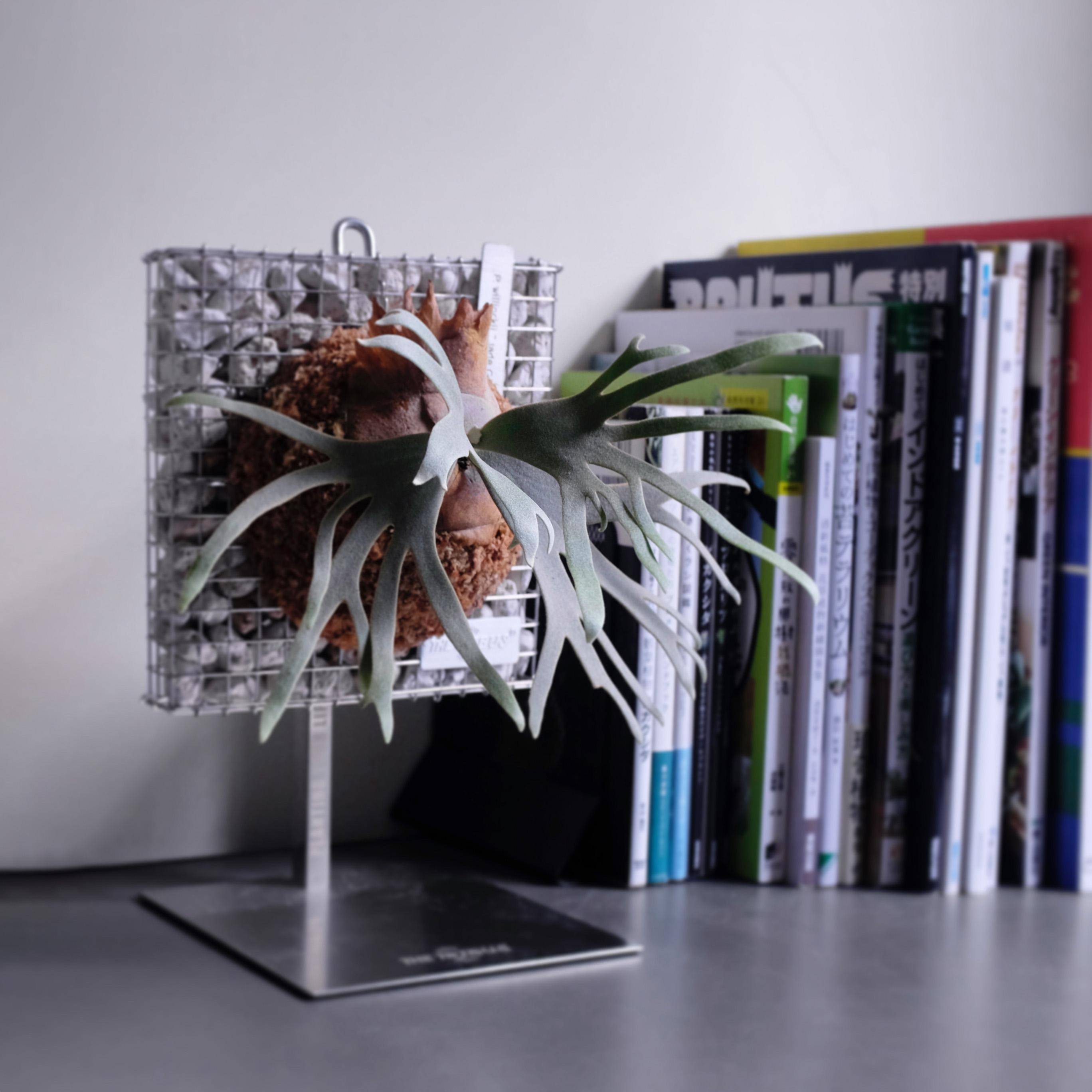
Compact and space-saving,
dwarf Platycerium willinckii has become a favorite
among many staghorn fern collectors.
But did you know?
Even within the same dwarf variety,
plants grown under artificial lighting and those grown under natural sunlight
can eventually develop completely different forms.
At the juvenile stage,
it is actually very difficult to determine the final form of a
dwarf P. willinckii.
With each new frond,
its appearance can change significantly.
During the early stages of growth,
different individuals can also look remarkably similar.
The most accurate assessment can only be made once the plant reaches maturity
and develops fully formed fertile fronds.
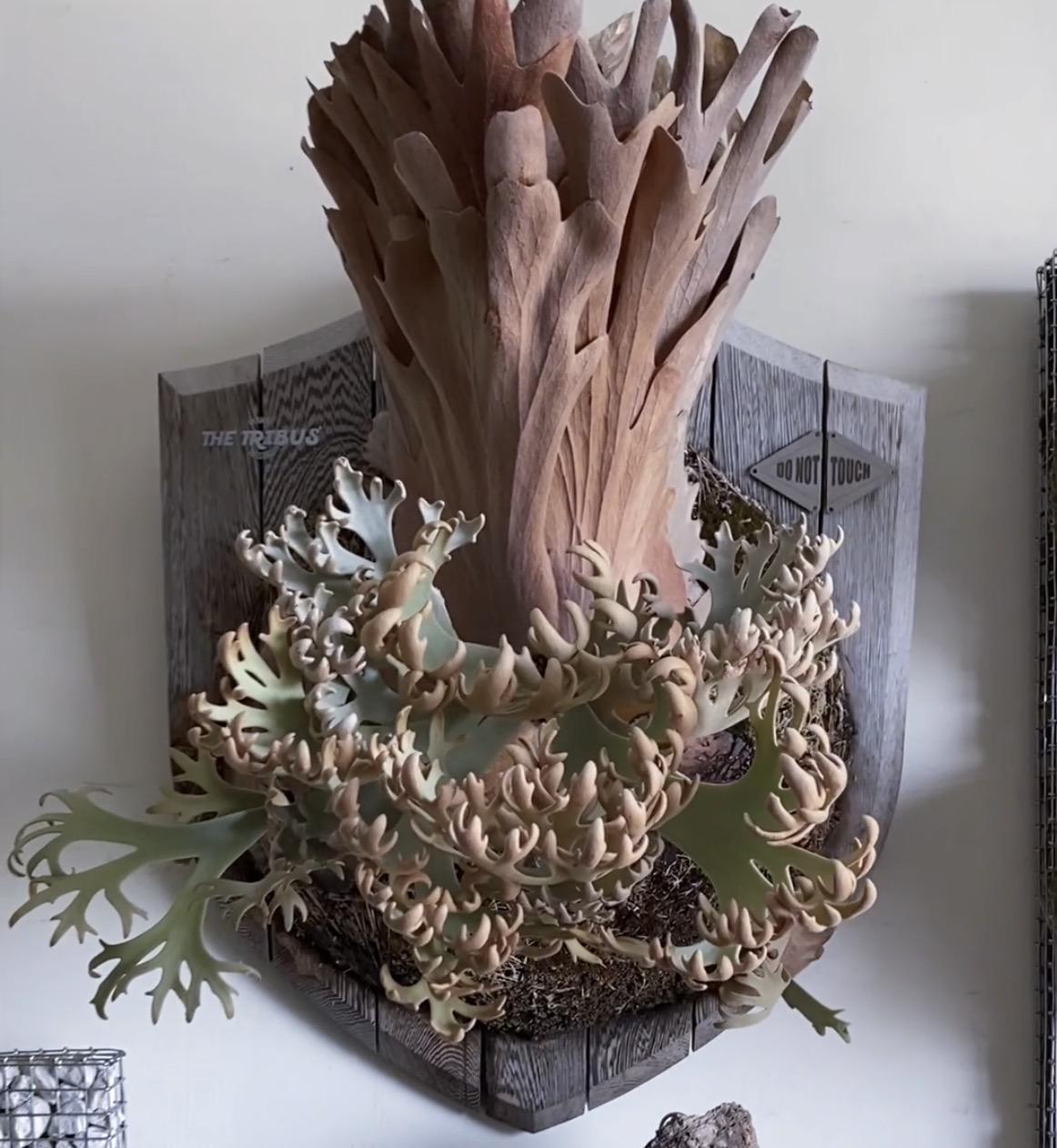
Mature plant —
brown sori forming near the tips of the fertile fronds
Variety certainly matters,
but the growing environment also has a direct influence on
how a staghorn fern ultimately develops.
Under fully artificial lighting in an air-conditioned growing environment,
conditions remain highly stable and the growth rate tends to be slower.
This makes it possible to maintain a much more compact overall size.
The tips of the fertile fronds are also more likely to remain rounded,
and fronds from different growth stages can often be retained at the same time.
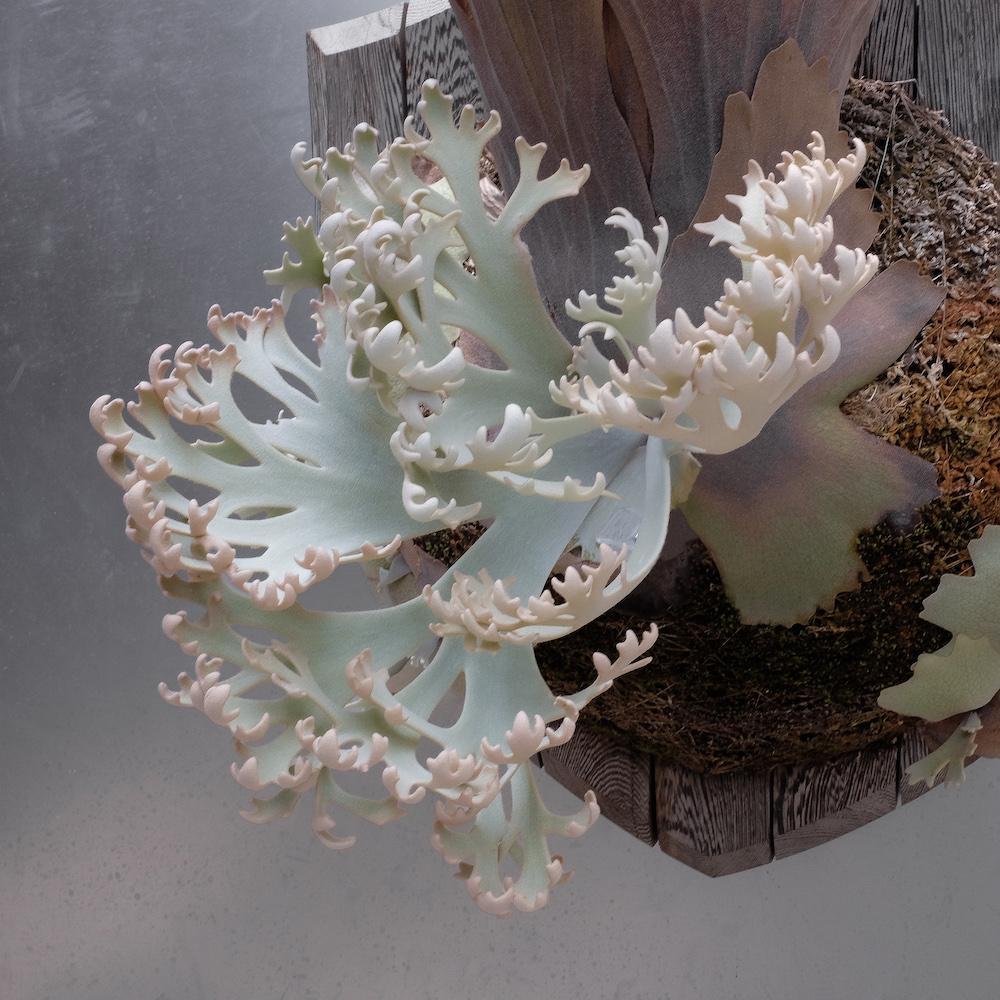
The fertile fronds tend to have more rounded tips, with thicker,
densely layered growth and fewer elongated fronds
However, a highly controlled and stable environment
can also cause different individuals to develop relatively similar forms.
When grown under natural sunlight,
even dwarf individuals can become noticeably larger.
With natural light, seasonal changes in sunlight and temperature continuously affect the plant.
Because the growing conditions are less uniform,
the natural differences between individual plants become much easier to see
Even though they are all dwarf P. willinckii,
you can clearly see the individual differences between each plant.
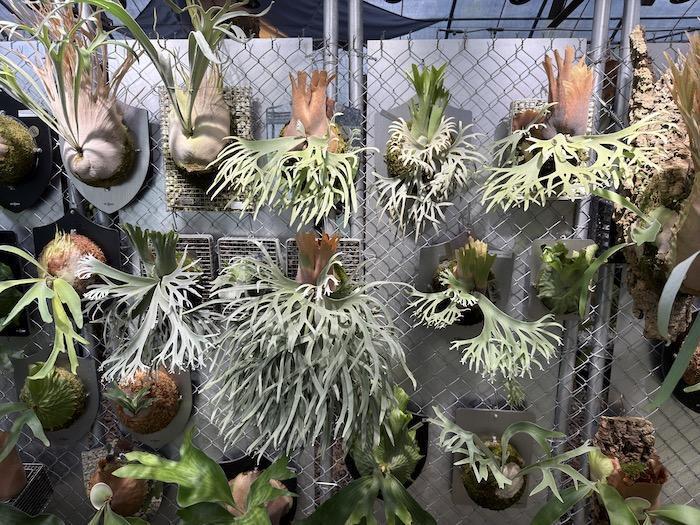
THE TRIBUS STUDIO ® growing environment
Non-air-conditioned, full-sun greenhouse.
Supplemental SSL grow lights are used during extended
cloudy periods in northern Taiwan, typically for 6–10 hours
In our growing environment,
mature plants generally reach approximately 45–60 cm.
They may not remain as compact and refined as plants grown
entirely in a climate-controlled environment,
but their individual characteristics become much more apparent.
And that is exactly what makes staghorn ferns so interesting—
The same variety, grown in different environments,
can develop completely different forms.
Controlled indoor environments can produce more compact, consistent forms.
Natural growing environments, on the other hand,
allow the individuality of each plant to become more visible.
Neither is better than the other.
It simply depends on the expression you want to achieve.
So, if you are trying to grow a staghorn fern toward a specific form,
the variety matters,
but the environment in which you grow it matters just as much.
Genetics define its potential.
Environment shapes its expression.
PLANT FILE 001 — COMPLETE
THE TRIBUS STUDIO ®
Article — Olivia
Images — Olivia & Albert
圖片/文章 Olivia & Albert


